NEWS칸 라이언즈 소식
김수경·유다정 기자, K-컬처의 브랜드 커뮤니케이션 확장성 조명
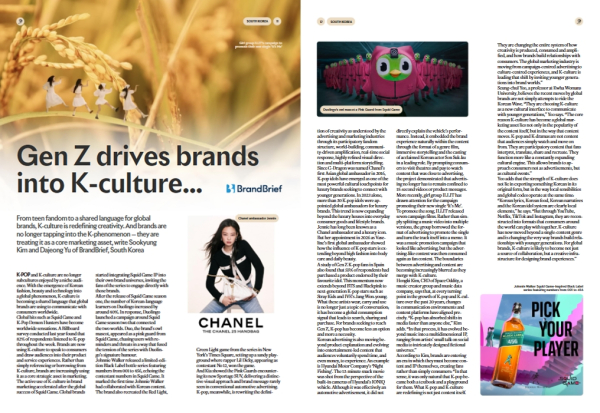
브랜드브리프가 K-컬처를 주제로 작성한 기사가 세계 최대의 크리에이티비티 페스티벌 칸라이언즈(Cannes Lions International Festival of Creativity)의 공식 데일리 매거진 '라이언즈 데일리 뉴스(Lions Daily News)'에 실렸다.
2일 칸라이언즈에 따르면 '라이언즈 데일리 뉴스'는 칸라이언즈 페스티벌 기간 동안 현장에서 매일 발행되는 공식 매거진으로, 전 세계 크리에이티브·마케팅·브랜드 산업 관계자들에게 페스티벌 주요 이슈와 글로벌 크리에이티브 담론을 전하는 매체다.
브랜드브리프는 '라이언즈 데일리 뉴스' 26일자 판에서 전 세계 크리에이티브 산업이 주목하는 무대에서 K-컬처가 어떻게 글로벌 브랜드 커뮤니케이션의 언어로 확장되고 있는지에 대한 기사를 다뤘다.
K-컬처는 이제 단순한 문화적 유행을 넘어, 브랜드가 소비자와 관계를 맺는 방식에도 새로운 기준을 제시하고 있다. 빠르게 변화하는 팬덤 문화, 디지털 플랫폼을 중심으로 한 참여 방식, 국경을 넘어 확장되는 문화적 공감대는 글로벌 마케팅 시장에서도 중요한 인사이트로 읽히고 있다.
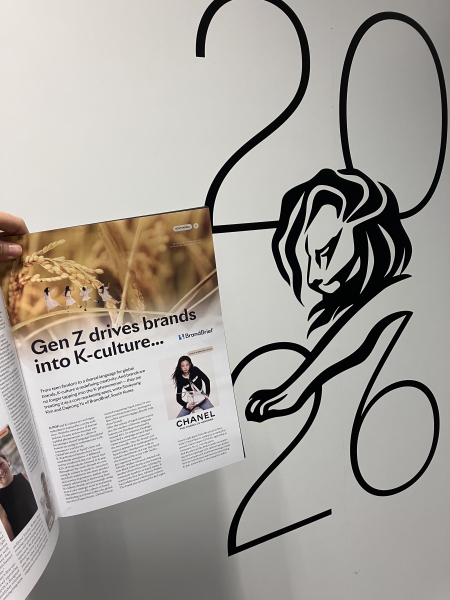
브랜드브리프는 이번 기사를 통해 K-컬처가 가진 크리에이티비티 확장성과 브랜드 산업 안에서의 가능성을 조명했다. 특히 K팝과 콘텐츠, 팬덤을 중심으로 형성된 한국 문화의 참여형 문법이 글로벌 브랜드의 커뮤니케이션 전략 안에서 어떻게 활용되고 있는지에 주목했다.
칸라이언즈 현장에서 발행되는 라이언즈 데일리 뉴스에 해당 기사가 소개됐다는 점은 한국의 문화와 브랜드 관점이 글로벌 크리에이티브 무대에서도 의미 있게 공유됐다는 데 의의가 있다.
김수경 브랜드브리프 편집장은 "브랜드브리프는 대한민국을 대표하는 글로벌 크리에이티비티 전문 매체로, 한국의 크리에이티브와 브랜드를 전 세계에 알리는데 앞장서오고 있다"며 "올해 칸라이언즈를 방문한 1만3000여 명의 글로벌 크리에이티브들이 '라이언즈 데일리 뉴스'를 통해 브랜드브리프의 기사를 직접 접하게 돼 영광스럽고 기쁘다"고 밝혔다.
그러면서 "앞으로도 브랜드브리프는 글로벌 크리에이티브 산업의 흐름을 가장 빠르게 포착하고 분석하는 동시에 한국 브랜드와 K-컬처의 잠재력과 중요성을 지속적으로 글로벌 독자들에게 전할 계획"이라고 전했다.
'라이언즈 데일리 뉴스'는 공식 홈페이지에서 볼 수 있으며, 브랜드브리프 기사는 기사 전문은 6월 26일자 라이언즈 데일리 뉴스 13-14페이지에 실렸다.
아래는 '라이언즈 데일리 뉴스'에 게재된 브랜드브리프 기사의 영문 원문과 한국어 번역본이다.

How K-culture is redefining creativity - Sookyung Kim & Dajeon Yu
From teen fan culture to a shared language for global brands
Entertainment-led advertising emerges as a new playbook for creating brand experiences
K-pop and K-culture are no longer subcultures enjoyed by a niche audience. As fashion, beauty and technology converge into a vast global cultural phenomenon, K-culture is becoming a shared cultural language that global brands use to communicate with consumers worldwide.
Global hits such as Squid Game and K-Pop Demon Hunters have become worldwide sensations, while a Billboard survey conducted last year found that 82% of respondents listened to K-pop throughout the week. Brands are now using K-culture to speak to consumers and draw audiences into their product and service experiences. Rather than simply referencing or borrowing from K-culture, brands are increasingly treating it as a core strategic asset in marketing.
The active use of K-culture in brand marketing accelerated after the global success of Squid Game. Global brands started integrating the Squid Game IP into their own brand universes, while fans of the series sought to engage directly with those brands.
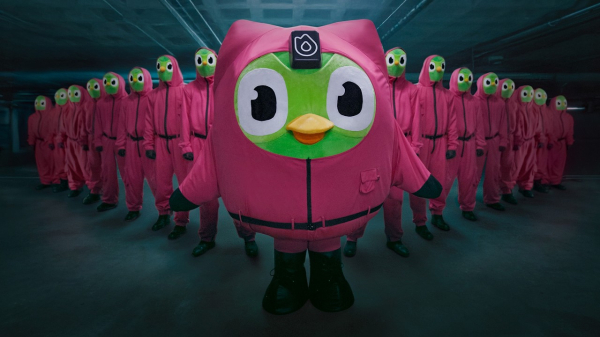
After the release of Squid Game Season 1, the number of Korean-language learners on Duolingo increased by around 40%. In response, Duolingo launched a campaign timed to Squid Game Season 2 that connected the two worlds. Duo, the brand’s owl mascot, appeared as a pink guard from Squid Game, chasing users with reminders and threats in a way that fused the tension of the series with Duolingo’s signature humor.
Johnnie Walker released a limited-edition Black Label bottle series featuring numbers from 001 to 456, echoing the contestant numbers in Squid Game. It marked the first time Johnnie Walker had collaborated with Korean content. The brand also recreated the Red Light, Green Light game from the series in the middle of New York’s Times Square, setting up a sandy playground where rapper Lil Dicky, appearing as contestant No. 12, won the game.
Kia showed the pink guards encountering the new Sportage, delivering a distinctive visual approach and brand message rarely seen in conventional automotive advertising.
K-pop, meanwhile, is rewriting the very definition of creativity as understood by the advertising and marketing industries through its participatory fandom structure, world-building, community-driven amplification, real-time social response, highly refined visual direction and multi-platform storytelling.
Since G-Dragon was named Chanel’s first Asian global ambassador in 2016, K-pop idols have emerged as one of the most powerful cultural touchpoints for luxury houses seeking to connect with younger generations. In 2023 alone, more than 30 K-pop idols were appointed global ambassadors for luxury brands.
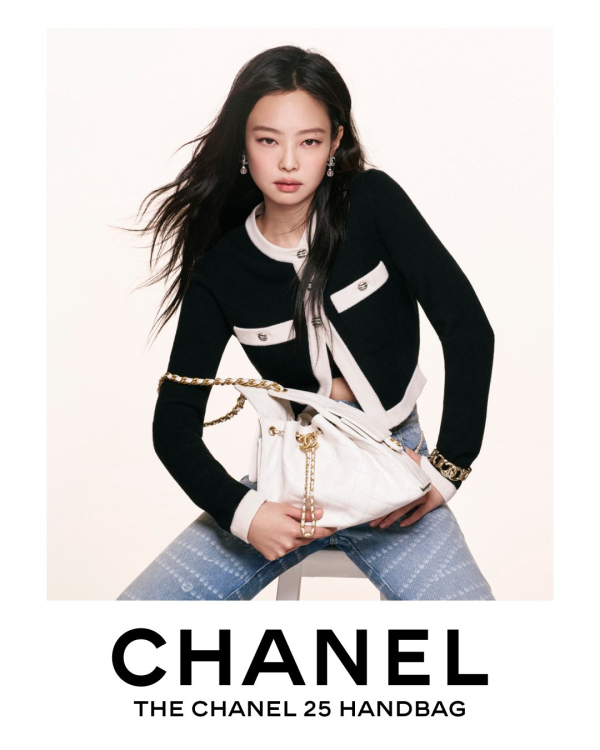
This trend is now expanding beyond luxury houses into everyday consumer goods and lifestyle brands. Jennie has long been known as a Chanel ambassador and a luxury icon. But her appointment in 2026 as Vaseline’s first global ambassador showed how the influence of K-pop stars is extending beyond high fashion into body care and daily beauty.
A study of Gen Z K-pop fans in Spain also found that 55% of respondents had purchased a product endorsed by their favorite idol. This momentum now extends beyond BTS and Blackpink to next-generation K-pop stars such as Stray Kids and IVE’s Jang Won-young. What these artists wear, carry and use is no longer just a topic of conversation; it has become a global consumption signal that leads to search, sharing and purchase. For brands seeking to reach Gen Z, K-pop has become less of an option and more of a necessity.
Korean advertising is also moving beyond product explanation and evolving into entertainment-led content that audiences voluntarily spend time, and even money, to experience.
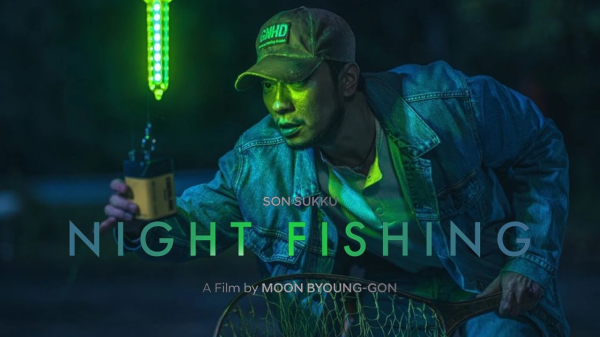
A leading example is Hyundai Motor Company’s Night Fishing. The 13-minute snack movie was shot from the perspective of the built-in cameras of Hyundai’s IONIQ vehicle. Although it was effectively an automotive advertisement, it did not directly explain the vehicle’s performance. Instead, it embedded the brand experience naturally within the content through the format of a genre film, immersive storytelling and the casting of acclaimed Korean actor Son Suk-ku in a leading role. By prompting consumers to visit theaters and pay to watch content that was close to advertising, the project demonstrated that advertising no longer has to remain confined to 15-second videos or product messages.
More recently, girl group ILLIT has drawn attention for the campaign promoting its new single, “It’s Me.” To promote the song, ILLIT released seven campaign films. Rather than simply splitting a music video into multiple versions, the group borrowed the format of advertising to promote the single and turn the track itself into a meme. It was a music promotion campaign that looked like advertising, and advertising-like content that was then consumed again as fan content. The boundaries between advertising and content are becoming increasingly blurred as they merge with K-culture.
Hongki Kim, CEO of Space Oddity, a music creator group and music data company, said that at every turning point in the growth of K-pop and K-culture over the past 20 years, changes in communication environments and content platforms have aligned precisely.
"K-pop has absorbed shifts in media faster than anyone else,” Kim said. “In that process, it has evolved beyond music into a multidimensional IP, ranging from artists’ small talk on social media to intricately designed fictional universes."
Kim said brands are entering an era in which they must become content and IP themselves, creating fans rather than simply consumers.
"In that sense, it was only natural that K-pop became both a textbook and a playground for them,” he said. “What K-pop and K-culture are redefining is not just content itself. They are changing the entire system of how creativity is produced, consumed and amplified, and how brands build relationships with consumers. The global marketing industry is moving from campaign-centered advertising to culture-centered experiences, and K-culture is leading that shift by inviting younger generations into brand worlds."
Seung-chul Yoo, a professor at Ewha Womans University, said the recent moves by global brands are not simply attempts to ride the Korean Wave.
"They are choosing K-culture as a new cultural interface to communicate with younger generations,” Yoo said. “The core reason K-culture has become a global marketing asset lies not only in the popularity of the content itself, but in the way that content moves. K-pop and K-dramas are not content that audiences simply watch and move on from. They are participatory content that fans interpret, translate, share and recreate. They function more like a constantly expanding cultural engine. This allows brands to approach consumers not as advertisements, but as cultural events."
Yoo added that the strength of K-culture does not lie in exporting something Korean in its original form, but in the way local sensibilities and global codes operate at the same time.
"Korean lyrics, Korean food, Korean narratives and the Korean idol system are clearly local elements,” he said. “But through YouTube, Netflix, TikTok and Instagram, they are reconstructed into formats that consumers around the world can play with together."
"K-culture has now moved beyond a single content genre and is changing the very way brands build relationships with younger generations,” Yoo said. “For global brands, K-culture is likely to become not just a source of collaboration, but a creative infrastructure for designing brand experiences."
K-컬처가 크리에이티비티를 재정의하는 방법 - 김수경·유다정 기자
소녀 팬들의 서브컬처에서 글로벌 브랜드의 공용 언어가 되다
새로운 경험 만드는 '엔터테인먼트형 광고'가 새 문법으로
이제 K팝과 K컬처는 더 이상 비주류만이 즐기던 서브컬처가 아니다. 음악과 패션, 뷰티, 테크, 팬덤, 플랫폼 문화가 유기적으로 결합된 하나의 거대한 글로벌 문화 현상으로 자리잡으면서, 이제 글로벌 브랜드들이 전 세계 소비자들과 소통하기 위해 선택하는 새로운 문화적 언어가 되고 있다.
실제로 '오징어 게임'과 '케이팝 데몬 헌터스'는 글로벌 신드롬을 일으켰고, 지난해 빌보드가 진행한 설문조사에 따르면 응답자의 82%가 일주일 내내 K팝을 청취한다고 답했다. 브랜드들은 이제 K-컬처를 통해 소비자와 대화하고, 제품과 서비스 경험 안으로 오디언스들을 끌어들이고 있다. 이제 K컬처를 단순히 '참고'하거나 '활용'하는 수준을 넘어 마케팅의 핵심 전략 자산으로 활용하고 있는 것이다.
K컬처를 브랜드 마케팅에 적극 활용하기 시작한 것은 '오징어 게임'의 글로벌 흥행 직후다. 글로벌 브랜드들은 '오징어 게임' IP를 브랜드 세계관과 연결하기 시작했고, '오징어 게임'의 팬들이 브랜드와 직접 소통하기를 원했다.
오징어 게임 시즌1 공개 후 듀오링고 내 한국어 학습자는 40% 가량 증가한 것으로 집계됐다. 이에 듀오링고는 오징어 게임 시즌2에 맞춰 세계관을 연결한 캠페인을 내놨다. 듀오링고의 마스코트인 '듀오'가 오징어 게임의 핑크 가드로 등장해 사용자들을 쫓아다니며, 작품 특유의 긴장감을 경고와 협박을 일삼는 듀오링고식 유머를 결합했다.
조니워커는 오징어 게임 참가자 번호를 연상시키는 001부터 456까지의 숫자를 입힌 블랙 라벨 한정판을 선보였다. 조니워커가 K 콘텐츠와 협업한 것은 이번이 처음이다. 이어 조니워커는 뉴욕 타임스퀘어 한복판에 모래밭을 마련해 오징어게임 속 '무궁화 꽃이 피었습니다' 게임을 재현하기도 했다. 참가번호 12번으로 등장한 래퍼 릴 디키가 경기에서 우승했다.
기아는 핑크가드가 '더 뉴 스포티지'를 만나는 모습을 담았다. 이를 통해 그간 자동차 광고에서 볼 수 없었던 독특한 영상과 브랜드 메시지를 전달했다.
더 나아가 K팝은 팬덤 참여 구조, 세계관 설계, 커뮤니티 기반 확산, 실시간 소셜 반응, 고밀도의 비주얼 디렉팅, 멀티 플랫폼 스토리텔링을 통해 기존 광고·마케팅 산업이 정의해온 크리에이티브의 개념 자체를 다시 쓰고 있다.
지드래곤이 2016년 샤넬의 첫 아시아 글로벌 앰배서더로 발탁된 이후, K팝 아이돌은 럭셔리 하우스가 젊은 세대와 만나는 가장 강력한 문화적 접점으로 부상했다. 2023년에만 30명 이상의 K팝 아이돌이 럭셔리 브랜드 글로벌 앰배서더로 발탁됐다.
이 흐름은 럭셔리 하우스를 넘어 일상 소비재와 라이프스타일 브랜드로까지 확장되고 있다. 제니는 샤넬의 앰배서더이자 '인간 샤넬'로 불려온 대표적인 럭셔리 아이콘이지만, 동시에 2026년 바세린의 첫 글로벌 앰배서더로 발탁되며 K팝 스타의 영향력이 고가 패션을 넘어 바디케어와 데일리 뷰티 영역으로 넓어지고 있음을 보여줬다.
스페인 Z세대 K팝 팬 대상 연구에서도 응답자의 55%가 좋아하는 아이돌이 보증한 제품을 구매한 경험이 있다고 답했다. 이 흐름은 BTS와 블랙핑크를 넘어 스트레이키즈, 아이브 장원영 등 차세대 K팝 스타들로 이어지고 있다. 이들이 입고, 들고, 사용하는 것은 더 이상 단순한 화제가 아니라 검색과 공유, 구매로 이어지는 글로벌 소비 신호가 됐다. Z세대를 공략하기 위한 브랜드 마케팅에서 K팝은 이제 선택이 아닌 필수요소가 된 것이다.
한국 광고 역시 제품을 설명하는 방식에서 벗어나, 관객이 자발적으로 시간을 내고 비용을 지불해 경험하는 엔터테인먼트형 콘텐츠로 진화하고 있다.
대표적인 사례가 현대자동차의 '밤낚시'다. '밤낚시'는 현대차 아이오닉 차량의 내장 카메라 시점으로 촬영한 13분가량의 스낵무비다. 자동차 광고임에도 차량의 성능을 직접적으로 설명하지 않고, 장르 영화의 형식과 몰입감 있는 스토리텔링, 배우 손석구의 존재감을 통해 브랜드 경험을 콘텐츠 안에 자연스럽게 녹였다. 소비자들이 극장을 찾아 돈을 내고 '광고에 가까운 콘텐츠'를 관람하게 만든 이 사례는, 광고가 더 이상 15초 영상이나 제품 메시지에 머물지 않는다는 점을 보여줬다.
최근에는 걸그룹 아일릿이 선보인 신곡 마케팅도 화제를 모으고 있다. 아일릿은 신곡 ‘It’s Me’를 발표하며 총 7편의 캠페인 영상을 공개했다. 뮤직비디오를 여러 버전으로 쪼개 배포하는 방식이 아니라, 광고의 형식을 빌려 신곡을 홍보하고 노래 자체를 밈으로 확산시킨 것이다. 신곡 홍보 캠페인이지만 광고처럼 보이고, 광고처럼 보이지만 다시 팬 콘텐츠로 소비되는 새로운 전략이다. K컬처와 결합한 광고와 콘텐츠의 경계가 점점 흐려지고 있는 셈이다.
뮤직 크리에이터 그룹이자 음악 데이터 기업 Space Oddity의 김홍기 대표는 "지난 20여년간 K팝과 K컬처의 성장 변곡점마다 '통신 환경과 콘텐츠 플랫폼의 변화'가 정확히 맞물려 있었다. K팝은 시대별 미디어의 변화를 누구보다 빠르게 흡수했고, 그 과정에서 아티스트의 소셜 스몰토크부터 정교하게 설계된 세계관까지, 단순한 음악을 넘어 입체적인 IP로 진화했다"고 분석했다.
그는 "브랜드들이 이제 스스로 콘텐츠이자 IP가 되어야 하고, 소비자가 아닌 팬(FAN)을 만들어야 하는 시대가 됐다. K팝이 그 참고서이자 함께 뛰어드는 놀이터가 된 것은 어쩌면 당연한 수순"이라며 "K팝과 K컬쳐가 재정의하고 있는 것은 콘텐츠 자체만이 아니다. 크리에이티브의 생산 방식, 소비 방식, 확산 구조, 그리고 브랜드와 소비자가 관계를 맺는 방식 전체가 바뀌고 있다. 글로벌 마케팅 산업은 광고 캠페인 중심에서 문화 경험 중심으로 이동하고 있으며, K컬쳐는 그 변화의 선두에서 젊은 세대를 브랜드의 세계 안으로 초대하고 있다"고 전했다.
유승철 이화여자대학교 교수는 "최근 글로벌 브랜드들의 움직임은 단순한 한류 편승이 아니다. 젊은 세대와 소통하기 위해 K컬쳐라는 새로운 '문화적 인터페이스'를 선택하고 있는 것"이라며 "K컬쳐가 글로벌 마케팅 자산이 된 핵심 요인은 콘텐츠의 인기 그 자체보다, 그 콘텐츠가 움직이는 방식에 있다. K팝이나 K드라마는 단순히 보고 끝나는 콘텐츠가 아니라, 팬들이 해석하고 번역하고 공유하고 다시 만들어내는 참여형 콘텐츠로, 계속 확장되는 문화적 엔진에 가깝다. 이는 브랜드가 소비자에게 광고로 다가가는 것이 아니라 문화적 사건으로 다가갈 수 있게 해준다"고 봤다.
이어 유 교수는 "특히 K컬쳐의 강점은 한국적인 것을 그대로 수출하는 데 있지 않고, 오히려 로컬한 감성과 글로벌한 코드가 동시에 작동한다는 데 있다. 한국어 가사, 한국 음식, 한국식 서사, 한국 아이돌 시스템은 분명히 로컬한 요소이지만, 그것이 유튜브, 넷플릭스, 틱톡, 인스타그램을 통해 전 세계 소비자들이 함께 놀 수 있는 형식으로 재구성된다"며 "K컬쳐는 이제 하나의 콘텐츠 장르를 넘어 브랜드가 젊은 세대와 관계를 맺는 방식 자체를 바꾸고 있다. 앞으로 글로벌 브랜드에게 K컬처는 단순한 협업 소재가 아니라, 브랜드 경험을 설계하는 하나의 창의적 인프라가 될 가능성이 크다"고 말했다.